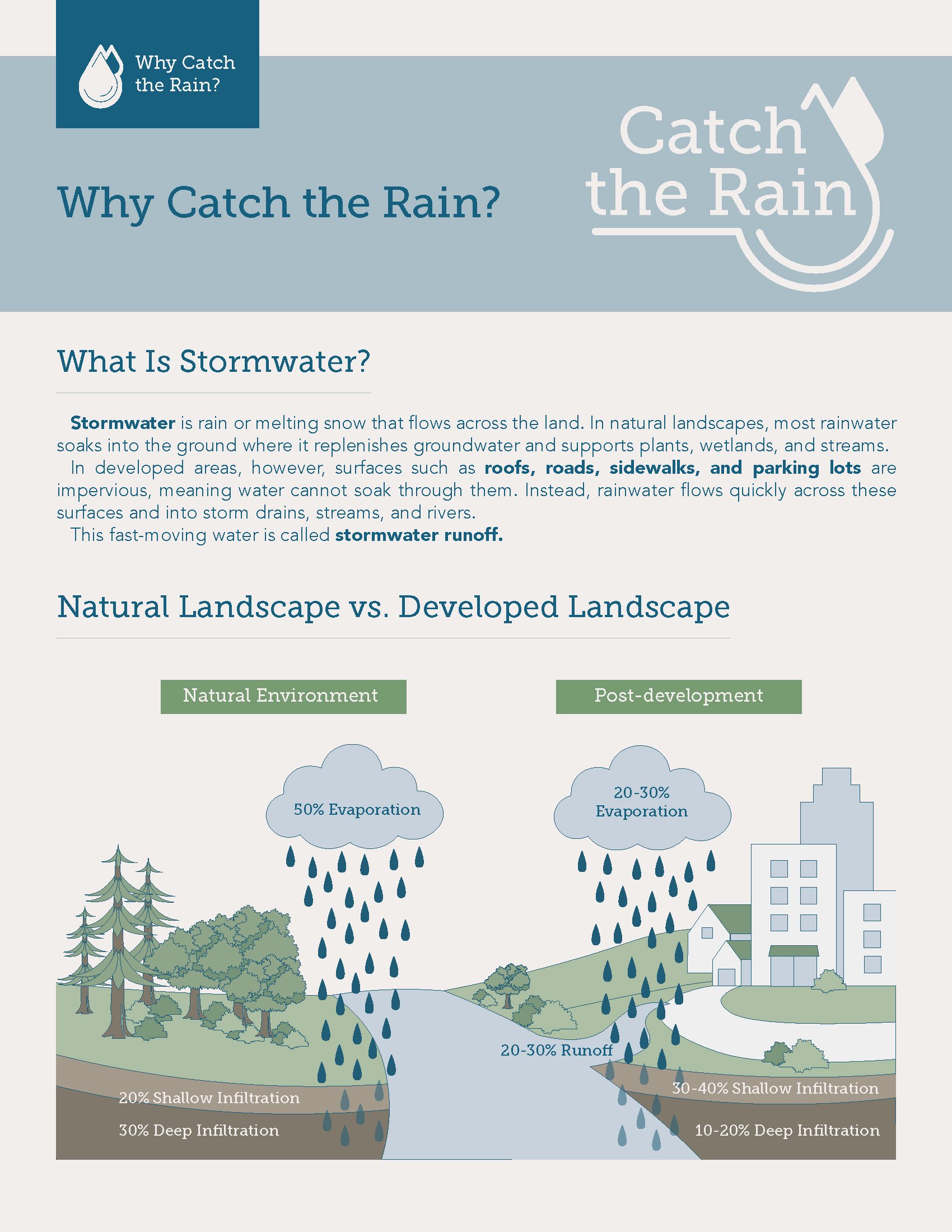
Every time it rains, your property tells a story.
Here’s how to make it a better one.
Right now, most of that story ends the same way — rainwater rushing off roofs, driveways, and lawns, picking up pollutants along the way, and draining into local streams before it can soak into the ground.
Catch the Rain helps you rewrite it. Small, affordable changes to your property can slow the rain down, filter it naturally, and put it back where it belongs — in the ground, feeding plants, recharging groundwater, and keeping streams clean.

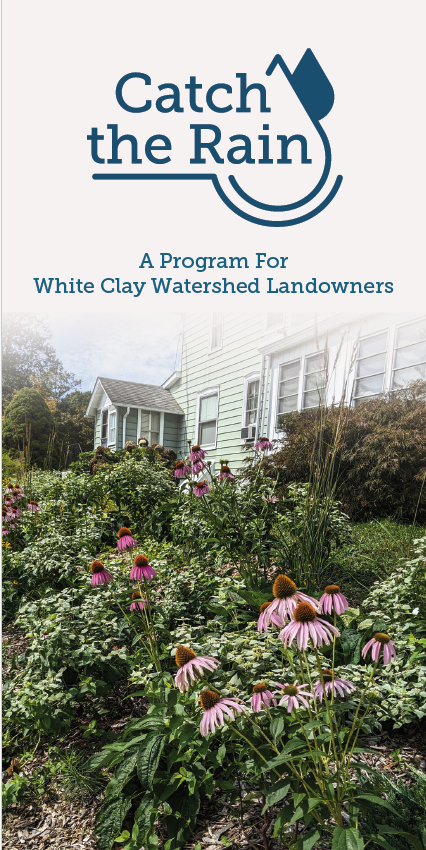
Rewrite your story.
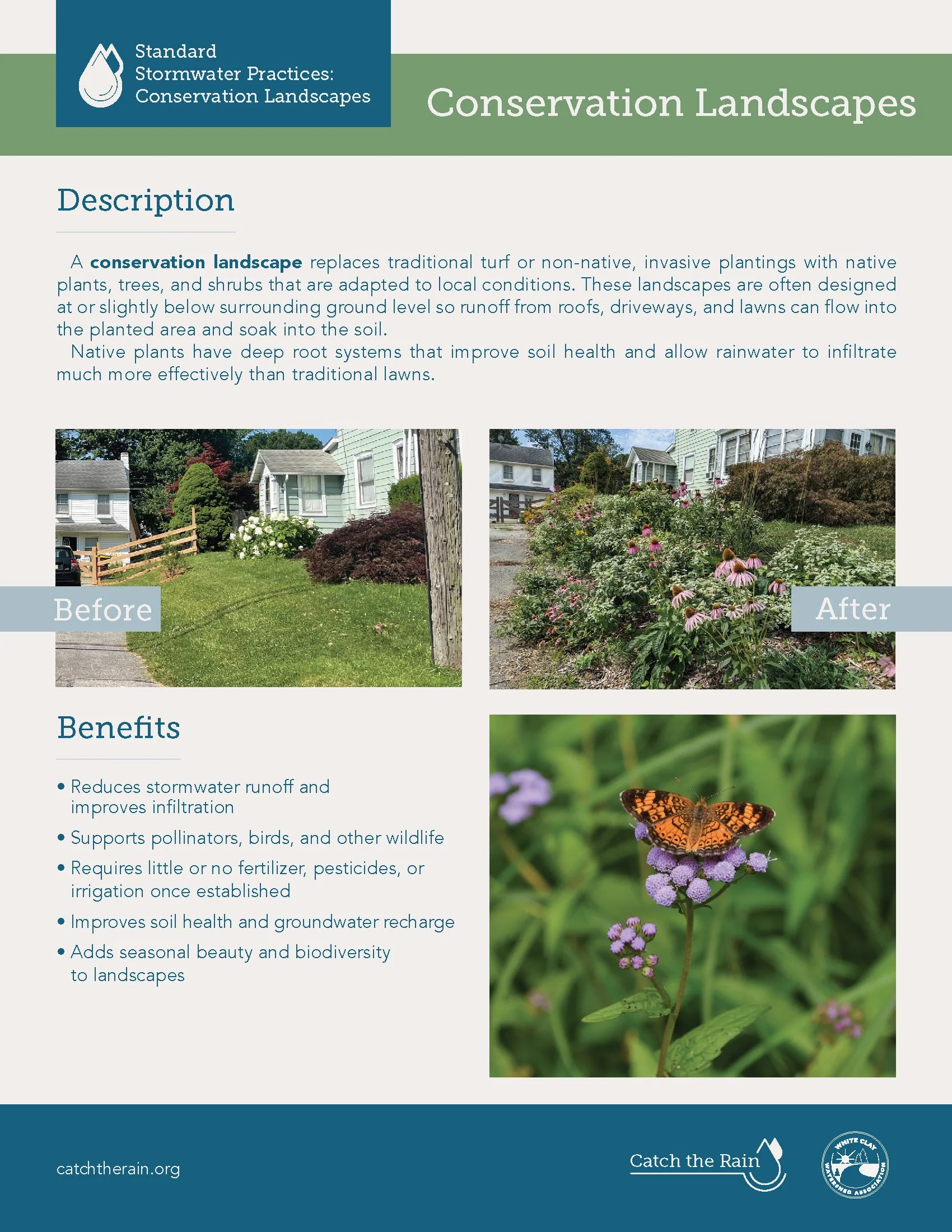
Even small changes—like planting a tree,or replacing lawn with native plants—can reduce stormwater runoff.
When several properties use these practices together, communities can reduce flooding, improve water quality, and create healthier watersheds.
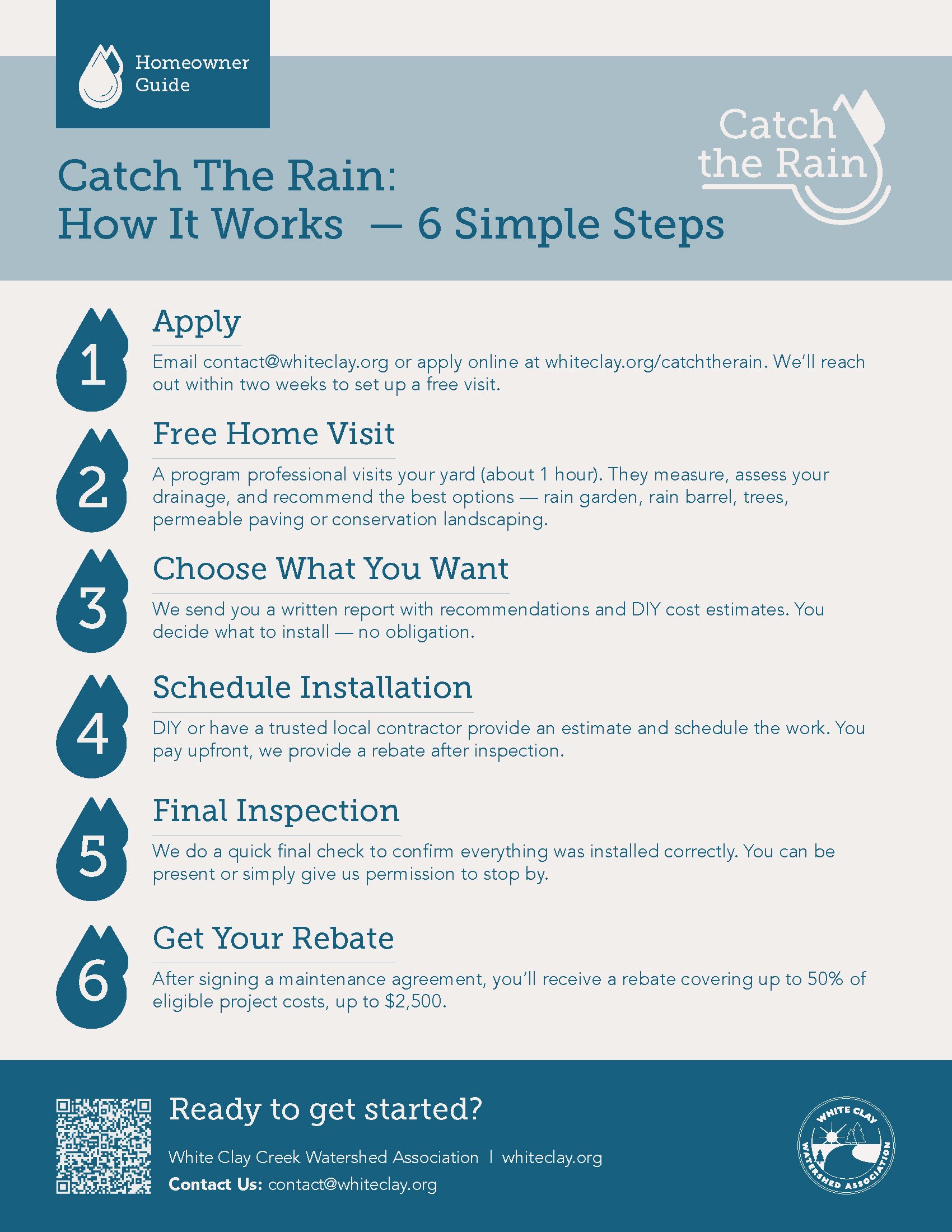
If you are a property owner in the White Clay Watershed you are eligible to apply to the Catch the Rain Program.
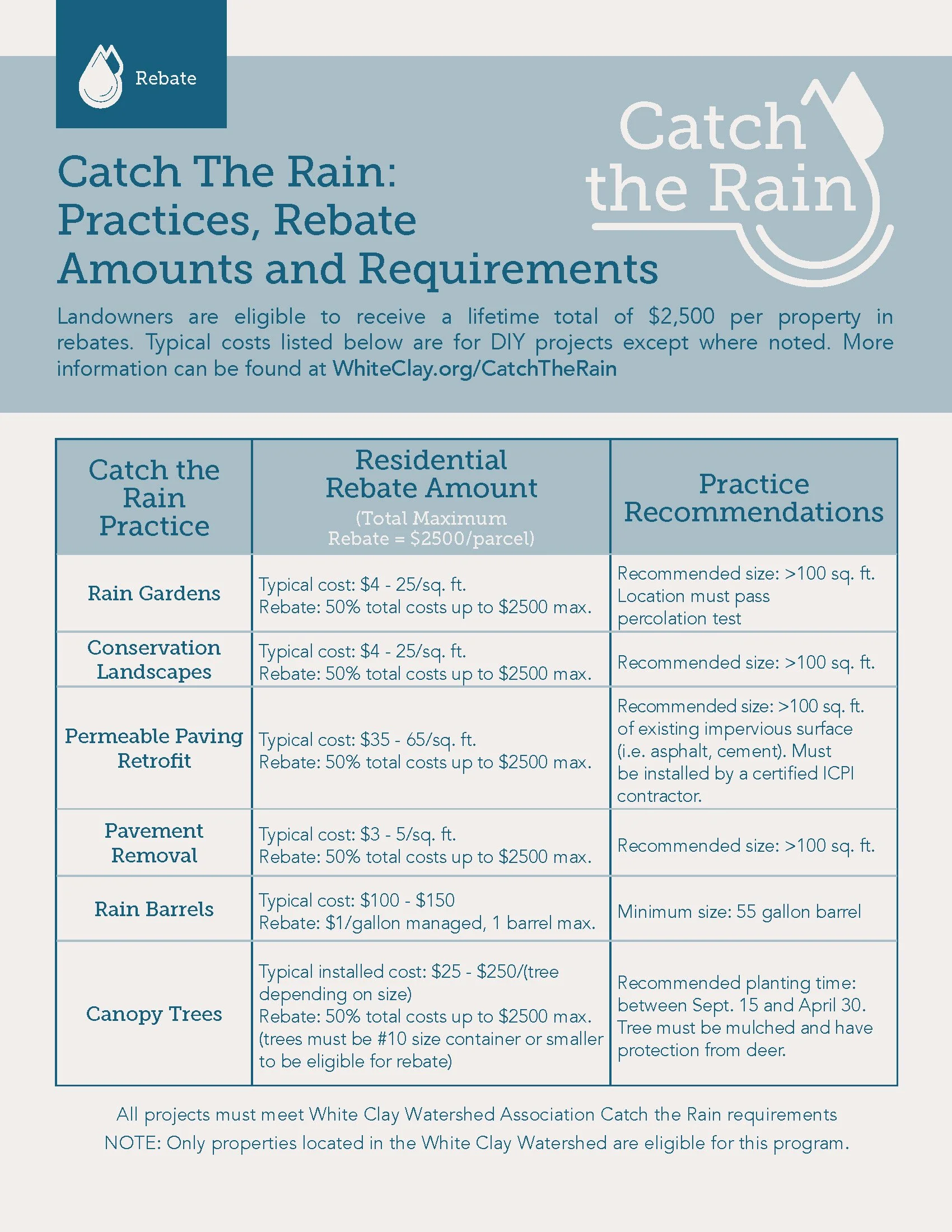
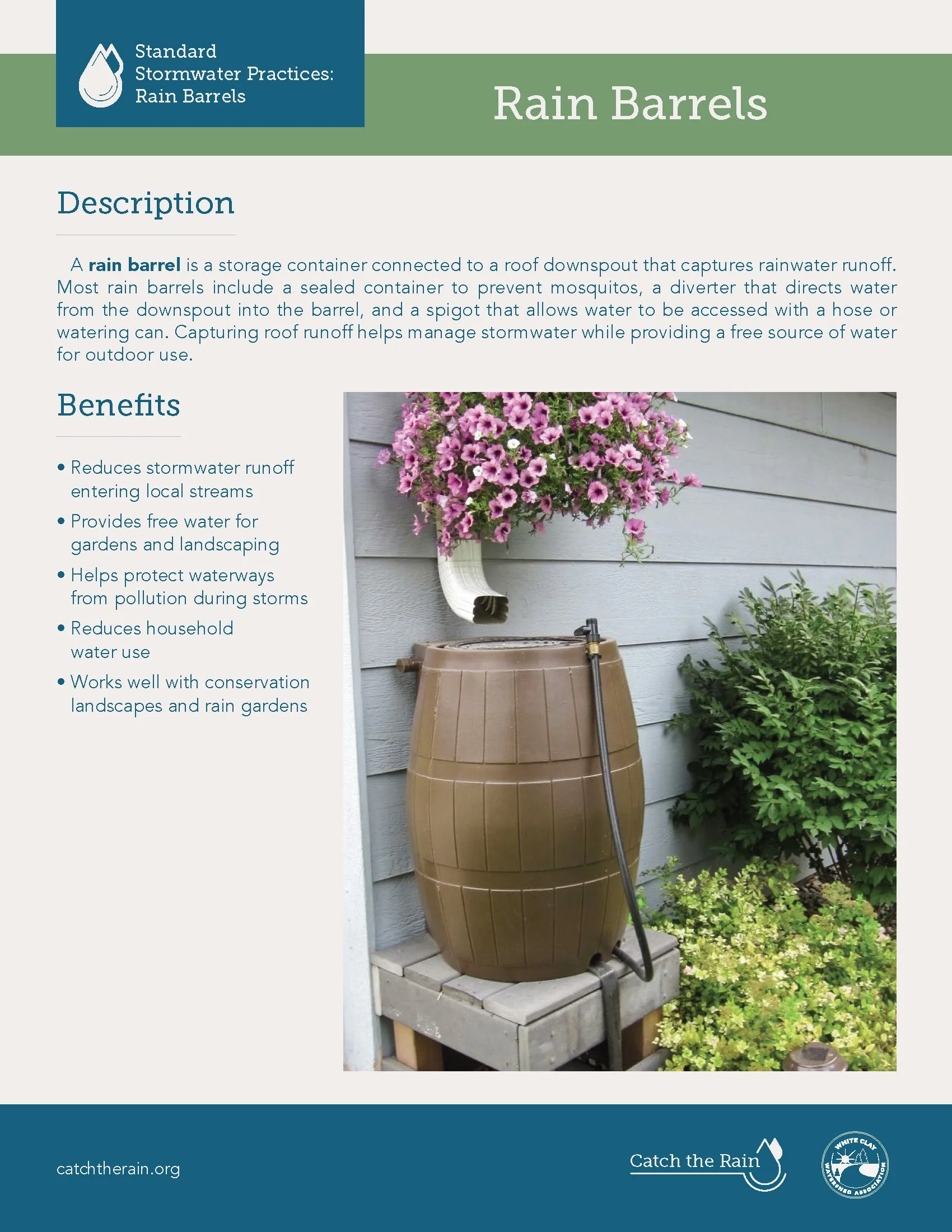
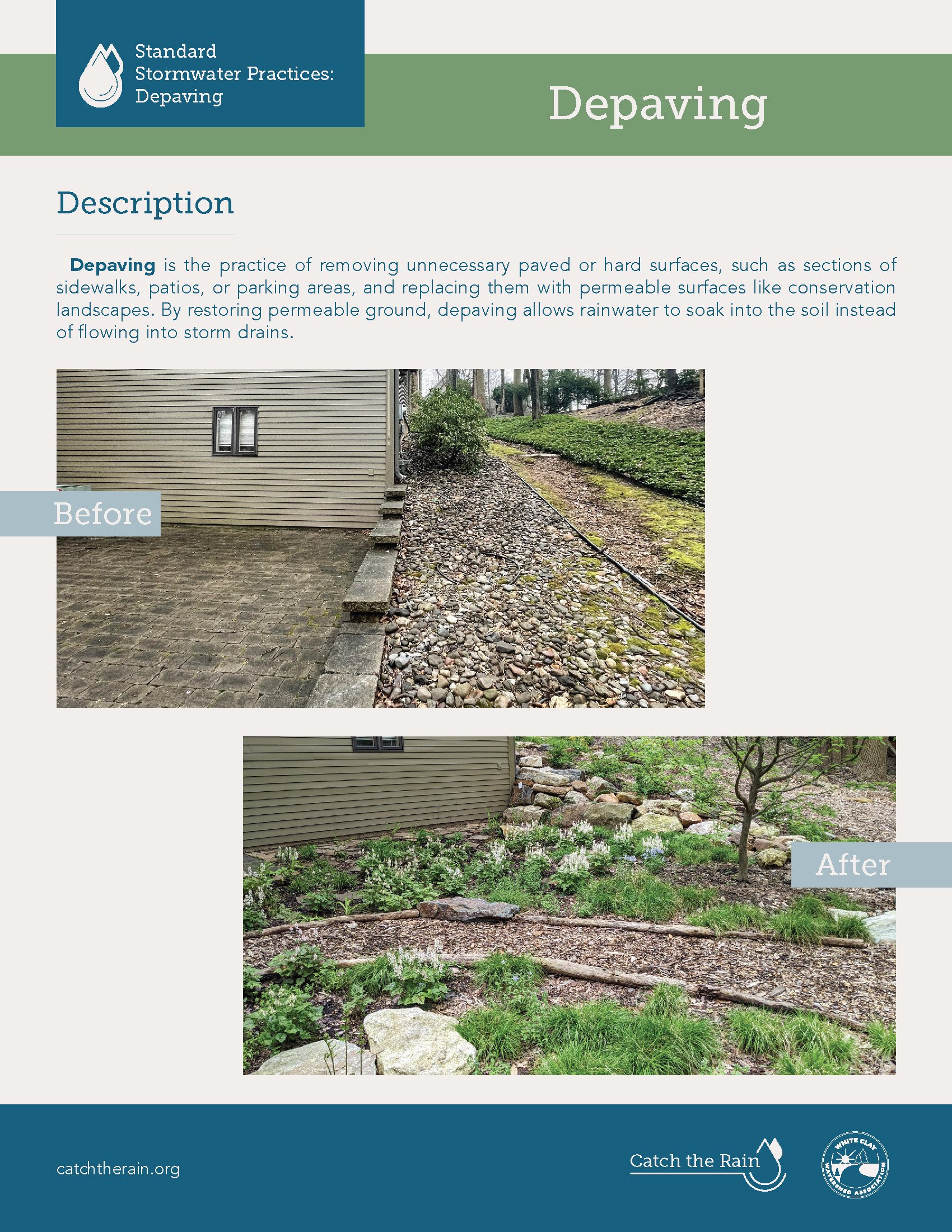
During your site visit we will explain simple practices you can undertake to improve water quality and habitat in your neighborhood including:
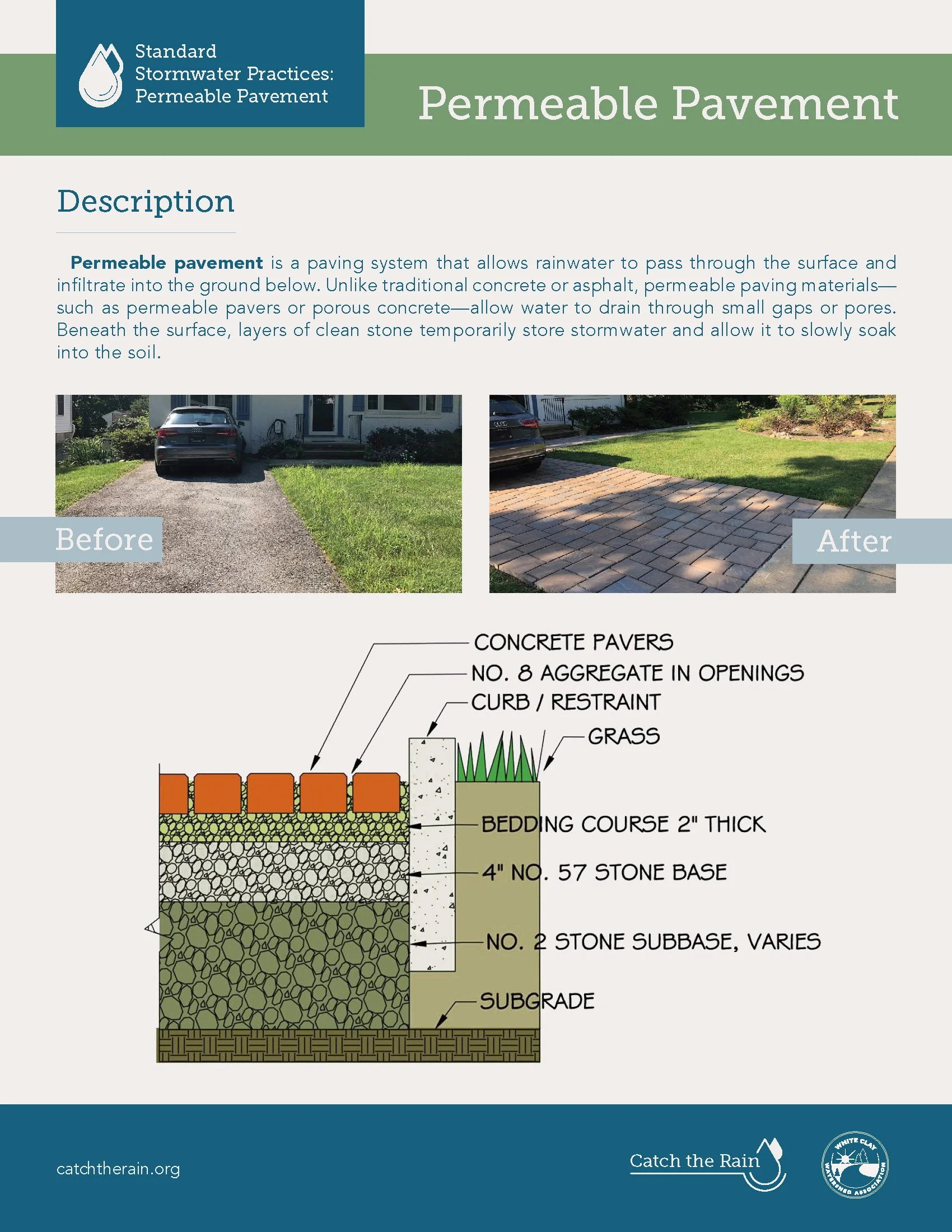
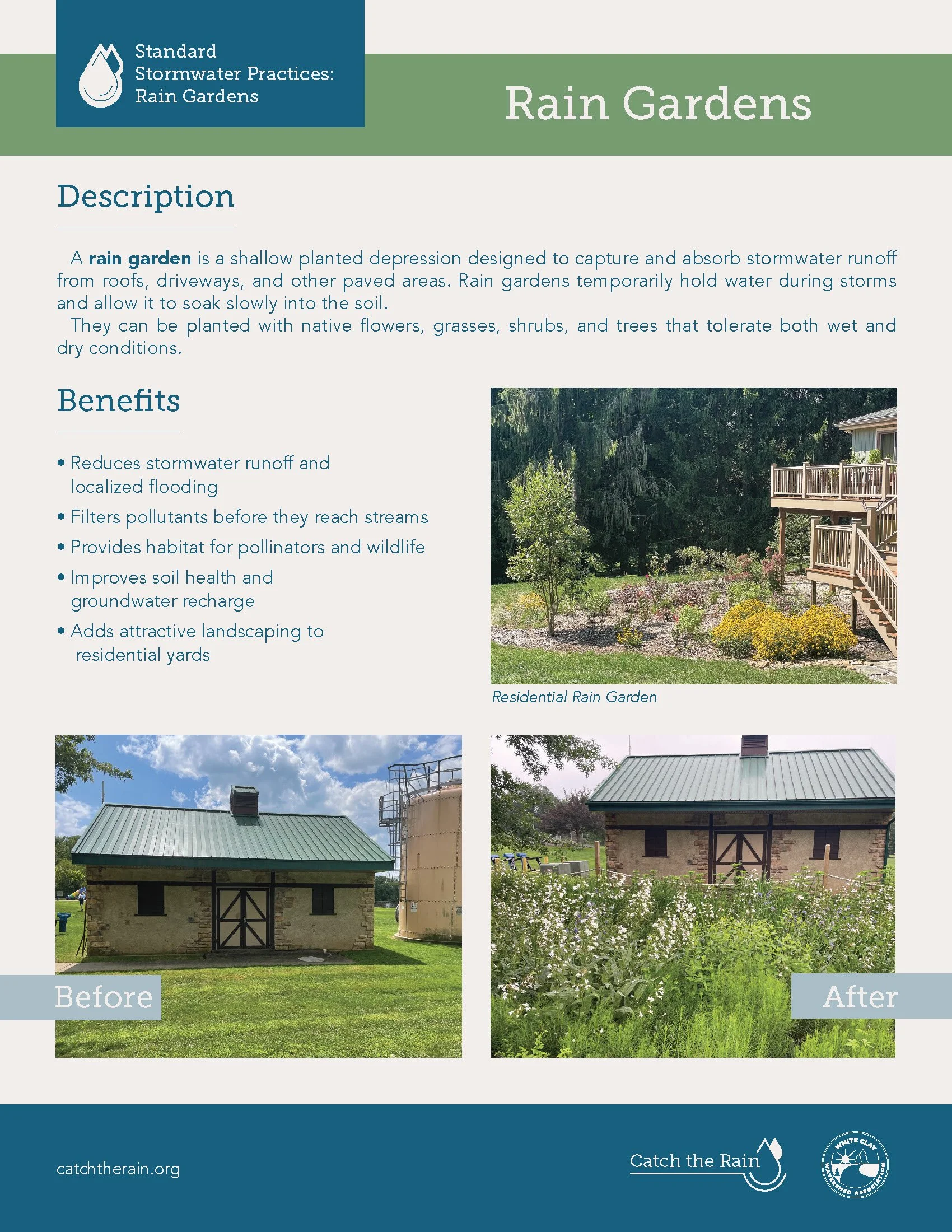
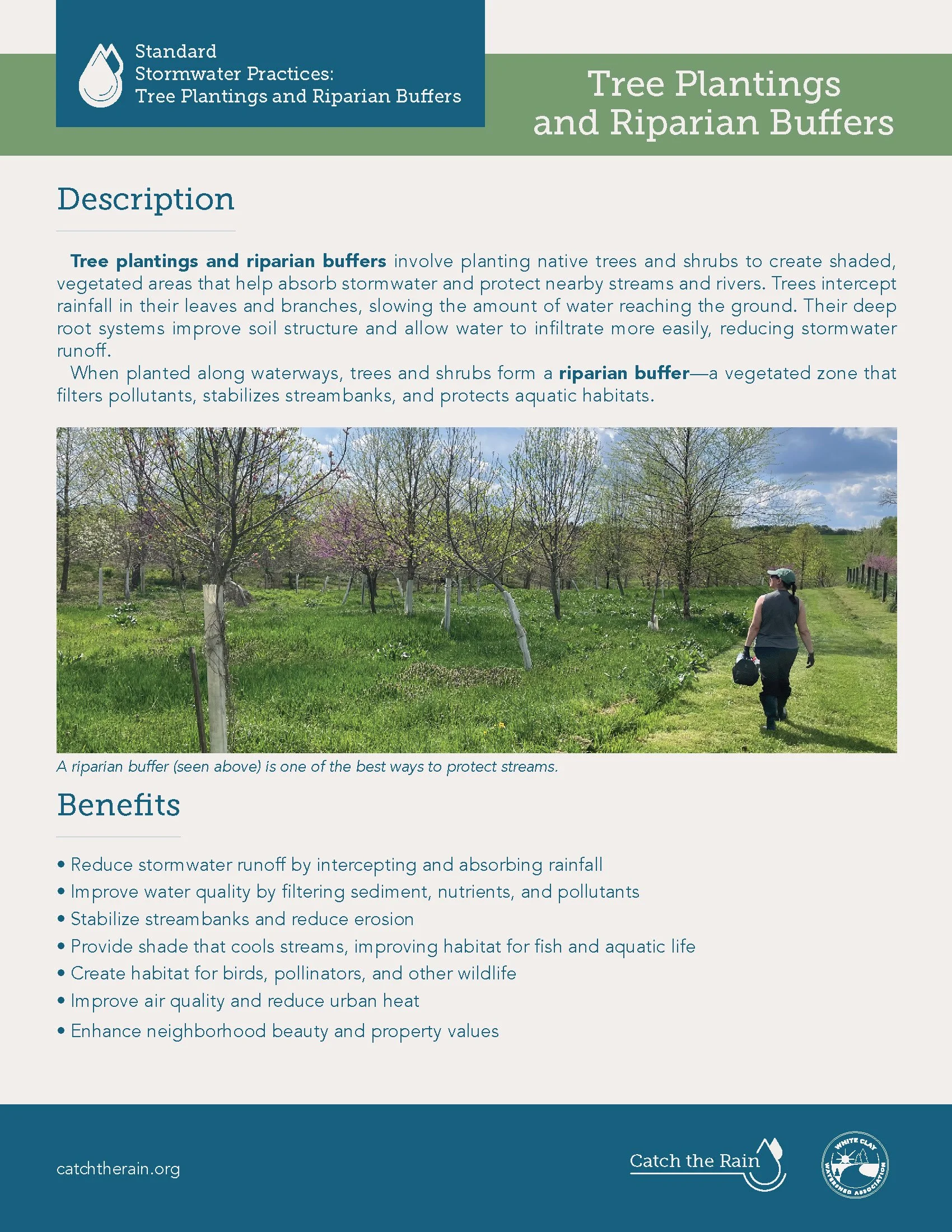
After your site visit, you will receive a written report with recommendations. You decide what to install — no obligation. You pay upfront, we provide a rebate for eligible practices after inspection.
Explore our catch the rain data hub→.
See where we’ve visited, what projects have been implemented and get a closer look at some of our featured projects.
Additional Information:
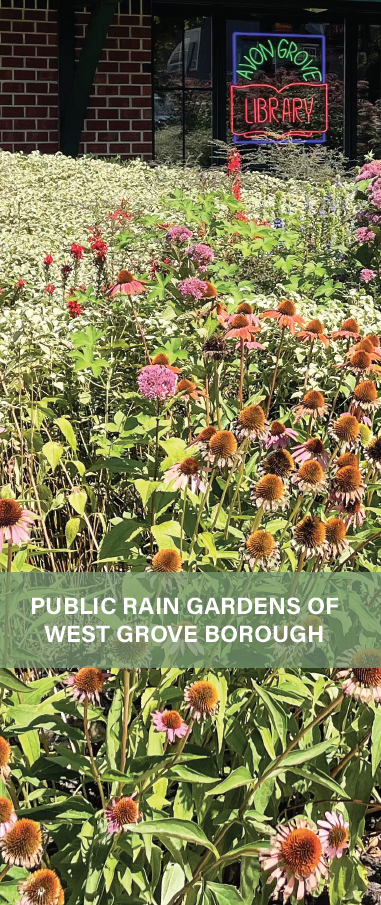
*Catch the Rain is primarily funded through the National Park Service Wild & Scenic Rivers Program. Additional funding support has been awarded from the E. Kneale Dockstader Foundation, Veolia, Constellation, and the Marjorie L. and Arthur P. Miller Fund.