Reduce Runoff; Slow It Down, Spread It Out, Soak It in! Swift Park Vegetated Swales.

With the help of New Castle County workers and numerous volunteers, Swift Park, located in Hockesssin, Delaware off of Old Lancaster Pike, now has two vegetated swales leading to a small tributary of the White Clay Creek. Vegetated swales are a type of BMP (Best Management Practice) as stated by the EPA (Environmental Protection Agency) and serve many purposes, its biggest contribution being to help better manage the stormwater runoff that can contaminate your drinking water.

What's the big deal? Water is everywhere. In fact, the earth is comprised of over 70% water. The problem, less than 1% of that is safe drinking water! This is where BMPs and stormwater management become incredibly important to protecting water quality and quantity, not only for today, but for future generations.

The swales at Swift Park were originally installed to help with stormwater runoff coming from the impermeable surface area of the paved parking lot adjacent to Mill Creek. The original swales were lined in turf grass and mowed on a regular basis, with the main function being to convey water away from the parking area and into the creek. While this is good for parking, this does little to help with water quality. A better way to use these swales is to vegetate them with a native plant community, and that is what the White Clay Wild and Scenic Program, along with New Castle County, North Creek Nurseries, and funding from Delaware Department of Natural Resources and Environmental Conservation (DNREC) set out to do this past year.

The primary goal of the swales, as stated earlier, is to convey stormwater, but they can also function to help slow down, spread out, and soak in stormwater runoff from smaller, more typical rain events. They were not created to manage the larger storm events we have seen in recent years, such as Hurricane Sandy (seen below, pre-planting). However, newly vegetated, the swales are now trapping some of the sediment (dirt and debris) that would have ordinarily made its way directly into the creek as well as filtering out some of the nutrients.
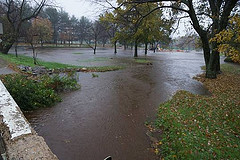
Swift Park Flooding

Prior to these swales being installed, the water would sweep debris, chemicals, and anything in its path off the roads and parking lot, through the grass, and eventually into the creek, where it can pollute your drinking water. Now, during smaller, more common rain events of 1" or less,  water runs into the swales, is slowed down by the vegetation, and the same polluted runoff has a better chance of infiltrating the ground. The native plants in turn help filter and infiltrate the water before it reaches the creek. This may seem like a small contribution to water quality improvement, and in commercial areas where there is more development and impervious surface coverage, it is difficult to completely control stormwater runoff. But every little thing we do adds up, and one easy way we can all better manage stormwater is by utilizing green infrastructure (native plant based BMPs) that can be as simple as a vegetated swale or small rain garden on your own property.
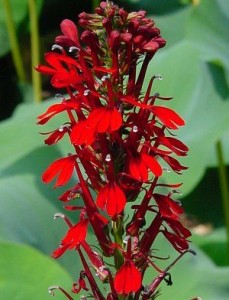
As if water quality wasn't enough, vegetated BMPs support native wildlife by providing habitat refuges. Native plants provide food and shelter for many species of animals. They do all this, and with proper care can also be beautiful landscapes! These swales in particular have many native plants that should begin blooming with in the first growing season, such as Lobelia cardinalis (Cardinal flower) seen blooming to the right which attracts hummingbirds with its shocking red, tubular flowers. You can find a full plant list used at Swift Park at the bottom of the page. Soon enough, the swales will be completely filled in with the native plants that are sure to be more attractive to park goers and wildlife alike; at the same time helping to improve your drinking water, little by little.

Native Plant List for Swift Park Swales:

Creek sedge (Carex amphibola)

Emory’s sedge (Carex emoryi)

Turtlehead (Chelone glabra)

Hot lips turtlehead (Chelone lyonii 'Hot Lips’)

Tufted hairgrass (Deschampsia cespitosa)

Hardy ageratum/ Eupatorium (Eupatorium coelestinum)

Blue flag iris (Iris versicolor)

Soft rush/ Poverty rush (Juncus effuses/ Juncus tenuis)

Spike gayfeather (Liatris spicata)

Cardinal flower (Lobelia cardinalis)

Great blue lobelia (Lobelia siphilitica)

Virginia bluebells (Mertensia virginica)

Eastern bee balm (Monarda bradburiana)

Obedient plant 'Pink manners' (Physostegia v. 'Miss Manners')

Appalachian mountain mint (Pycnanthemum muticum)

Golden groundsel (Senecio aureus)

Fireworks goldenrod (Solidago rugosa 'Fireworks')

For more on native plant suggestions, click here.

To view photo gallery from project, click here.

-article written by Ed Trommelen, summer intern 2013

To learn more about stormwater BMP's check out the video below created by the EPA.

A Garden Built to Benefit People & Nature: Visit the First SITES certified Residential Landscape on the East Coast!

taylor labrynth

Date: Thursday September 19th, 2013 (Rain Date: Friday September 20th: you will be notified in the event of a rain cancelation, the tour will go on if it is only raining lightly!)

Time: 5:30-7:00 p.m.

Location: Creek Road, Kennett Square, Pennsylvania. Directions will be emailed to registered participants prior to the event. Please make all efforts to car pool - on site parking is limited.

Registration is required. Only the first 25 registrants will be able to attend this lecture and tour. If there is enough interest we will make every effort to add an additional tour date. REGISTRATION IS NOW FULL! If you would like to be put on a waiting list please send an email to mpc@whiteclay.org

20130225125411Come join local landscape architect, Margot Taylor, on a personal and up close tour of her property, a 3-star certified sustainable SITES project. The Sustainable Sites Initiative (SITES), is an international program that evaluates and rates sustainable practices in Design, Construction, and Maintenance of landscapes. The new rating system gives credits for the sustainable uses of water, the conservation of soils, wise choices of vegetation and materials, and design that supports human health and well-being. The Taylor property is now developed as a landmark demonstration site for sustainable land practices. This accomplishment marks the second certification by SITES of a residential property world-wide and the first on the east coast.

Presentation will provide overview of SITES program, how residential project met standards, and include a hands-on demonstration/ activity on a sustainable landscape practice.  A site tour will follow the presentation.

Overview

The property demonstrates a variety of ways to make the home landscape sustainable, beautiful, and fun: (1) Storm water conveyances & rain garden, (2) green roof & straw bale hut, (3) drip irrigation, (4) Reuse of construction materials, and (5) recycled garden art.

20130225125345

The SITES program is ultimately about rebuilding a site's ecosystem services. Sustainable Landscapes Give Back, providing natural benefits that are essential to daily life, like cleaning air and water, reducing floods, combating climate change, and other natural benefits that support life on the earth.  Conventional landscape practices unintentionally often work against nature by ignoring, reducing or eliminating beneficial ecosystem services.  Sustainable landscape practices rebuild and optimize natural system processes and in doing so begin to repair the web of life by restoring environmental and human health and well being, one garden at a time.

Sustainable practices spotlight the following areas:

• Water; • Soil; • Vegetation; • Material Selection; and • Human Health and Well-Being.

The Christina Basin Pollution Control Strategy is designed to reduce the amount of nitrogen, phosphorus and bacteria in the polluted waters of the Christina Basin which is made up of the Brandywine, Christina, Red Clay and White Clay watersheds. SITES requires applicants to address control of pollutants of concern for project site watershed, in this case the Red Clay Creek.  The Red Clay Creek is impaired in area of property for the above pollutants and the addition of sediment.  The property extensive storm water management BMP's and state of the art wastewater treatment systems serve to eliminate contribution of known basin pollutants into the Red Clay and ultimately the Christina Basin.  Presentation will explain design, construction, operations, and maintenance responses that are adaptable and affordable at the residential project scale and reduce sources on non-point pollutants into local waterways.

Biography: Margot Taylor, RLA PA & DE, Environmental Consultant, Environmental Educator

Margot Taylor utilizes her 29 years of experience in landscape architecture, resource conservation, and environmental education to design/ develop and manage an array of ecological restoration, land management, and environmental design and advocacy projects through her consulting practice.  Her expertise includes riparian and forest habitat restoration; a holistic approach to land, vegetation and soil resource management; design of integrated and natural process-based stormwater management systems; design, construction, operations and management of sustainable landscapes; and procedural and documentation requirements that meet the Sustainable Sites Initiative standards.

She has a Bachelor’s of Science in Environmental Design, a Master’s level certificate in Education, has taught landscape architecture at Temple University, is a member of Delaware’s Forest Stewardship Committee and an advisor for Kennett Township on resource conservation and best management practices through leadership roles as chair/ member on the Environmental Advisory Council and Red Clay Scenic By-way Committee. For kicks she mountain bikes, kayaks and bows a Celtic fiddle style.

New Castle County Hosts BMP Maintenance Workshop.

Stormwater Work Shop 6-19-2013 Shane (1)

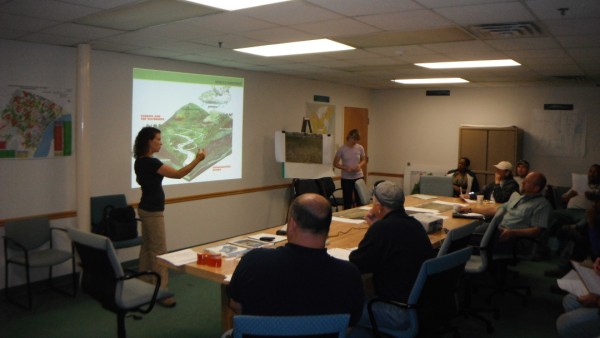
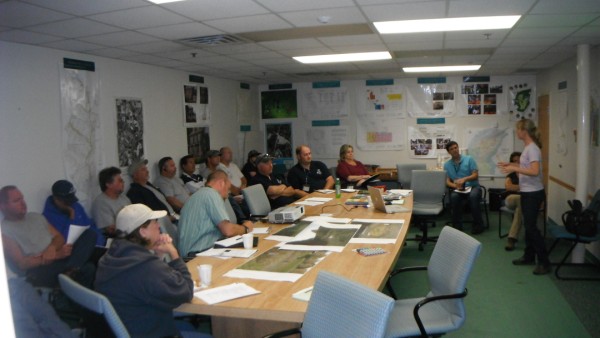
On Wednesday, June 18, New Castle County hosted a Best Management Practice (BMP) Maintenance Workshop for employees charged with managing and maintaining the BMPs throughout the County.  More than 20 New Castle County employees attended the three hour workshop which consisted of an in-class segment, followed by a hands-on component at a recently installed BMP. The workshop was presented by Shane Morgan, White Clay Creek National Wild and Scenic Rivers Program Manager, and Claudia West, MLA, Ecological Sales Specialist for North Creek Nurseries. This was a pilot workshop, the first in a series of programs we hope to offer to employees of municipal governments, government representatives, landscape contractors, home owner associations, and other organizations interested in learning about why and how we install BMPs, how they function to improve water quality, and how to maintain them so that they operate successfully.

Stormwater Work Shop 6-19-2013 Claudia (4)

The workshop began with an overview of what a watershed is an how water moves through the landscape, connecting what we do on land with the impact our actions have on water quality and quantity.  A more in depth discussion of how plant based BMPs function and look throughout different stages of establishment and seasons, and how to successfully maintain these systems followed.  Questions were taken from the attendees in advance of the workshop so that it could be specifically tailored to the needs and concerns of the county employees.

Stormwater Work Shop 6-19-2013 swales (6)

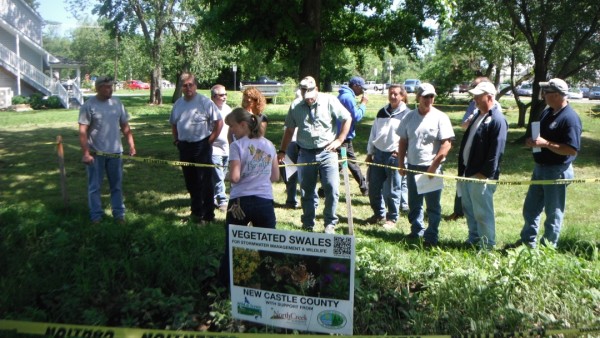
The second part of the workshop took place at a newly installed vegetated bioswale in Hockessin, DE. The group learned how to monitor planted systems and identify problematic invasive plant species in the field. These skills are essential for proper management and the long term success of stormwater management landscapes.

While this workshop focused on municipal owned BMPs, it's equally important that the public understands that best management practices are not limited to government agencies responsible for meeting water quality standards. These practices are just as applicable to individual property owners as well. We all live in a watershed and any individual action taken to improve water quality however small it may seem, whether it's disconnecting a downspout and installing a rain barrel or rain garden, collectively adds up. If we begin to treat stormwater as a resource, instead of the nuisance we currently perceive it to be, together we can accomplish a lot.